
Energy bufferingfor always-on AI.
Arclix is developing a hydrogen-based energy buffer system designed to shift energy across time and support continuous AI data center operations.
Computing demand is continuous. Energy availability is not.
AI infrastructure developers and data center operators must plan around when and where electricity is available. Arclix is developing energy-buffering infrastructure for the gap between available supply and continuous computing demand.
Shift energy across time
Store energy when supply is available and dispatch it after the original supply window has passed.
Support continuous loads
Develop a long-duration buffer around the operating needs of energy-intensive AI compute.
Hydrogen as an energy buffer.
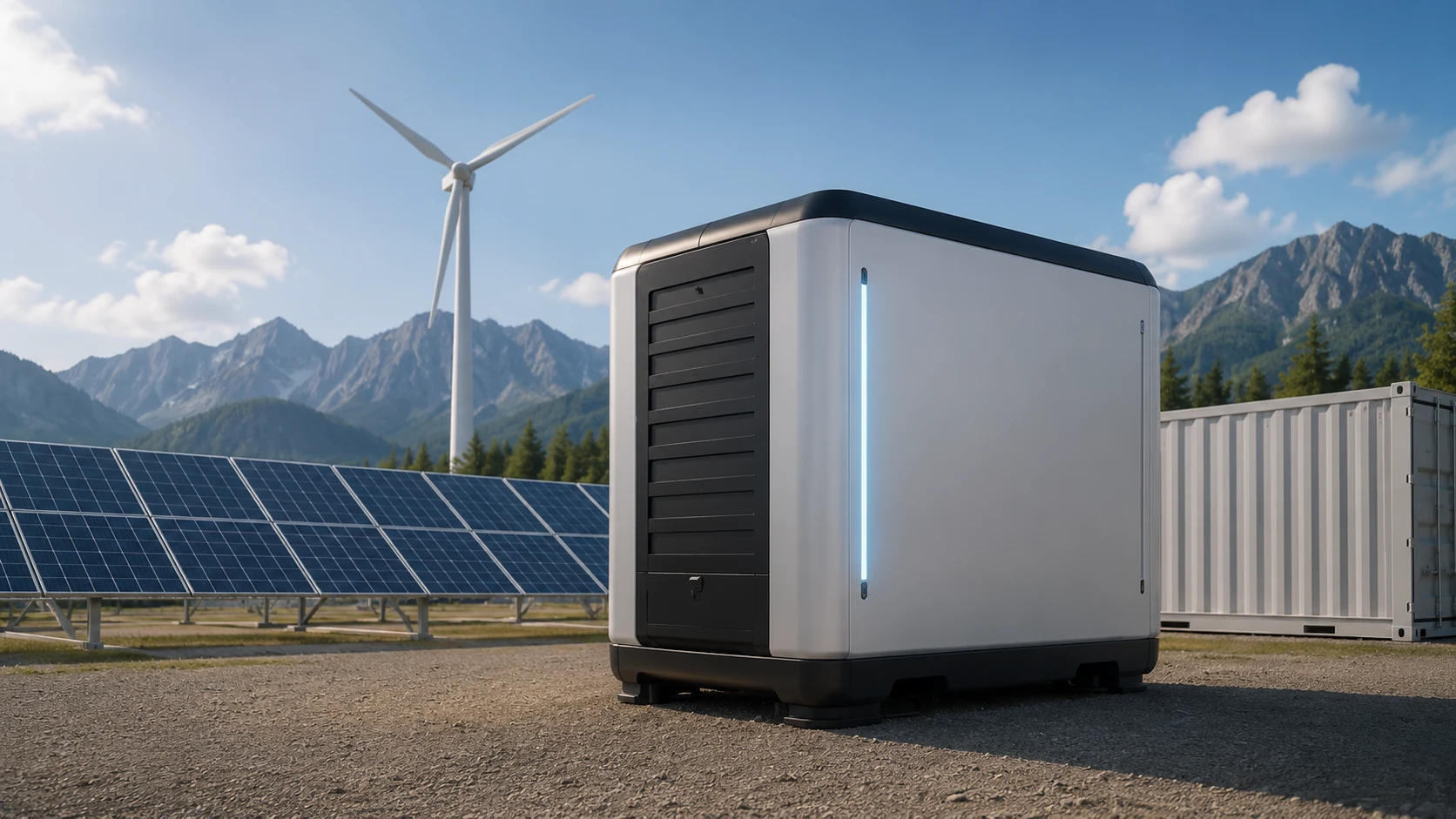
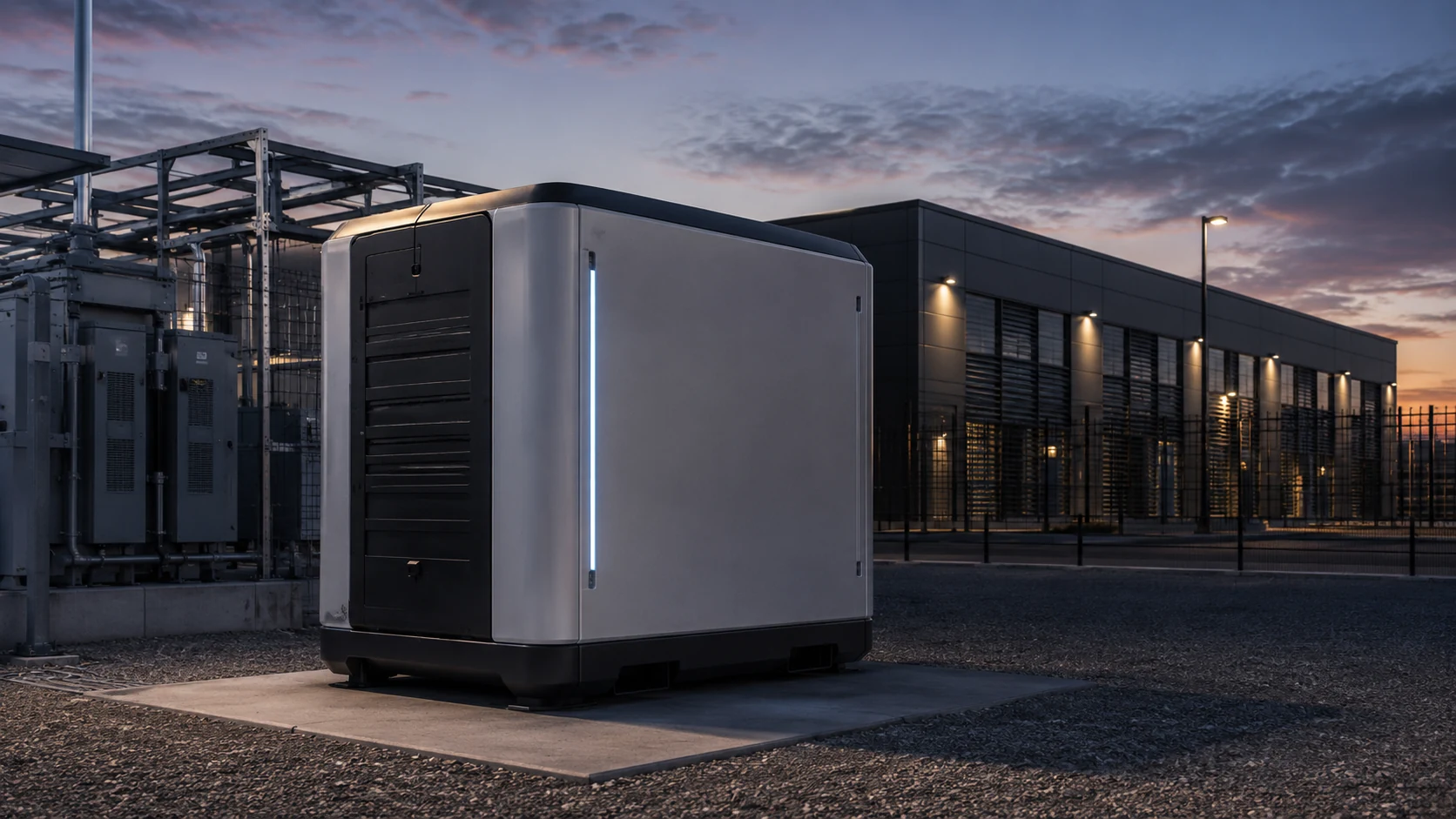
The long-term Energy Pod concept is intended to connect hydrogen production, solid-state storage and electricity generation in one integrated system.
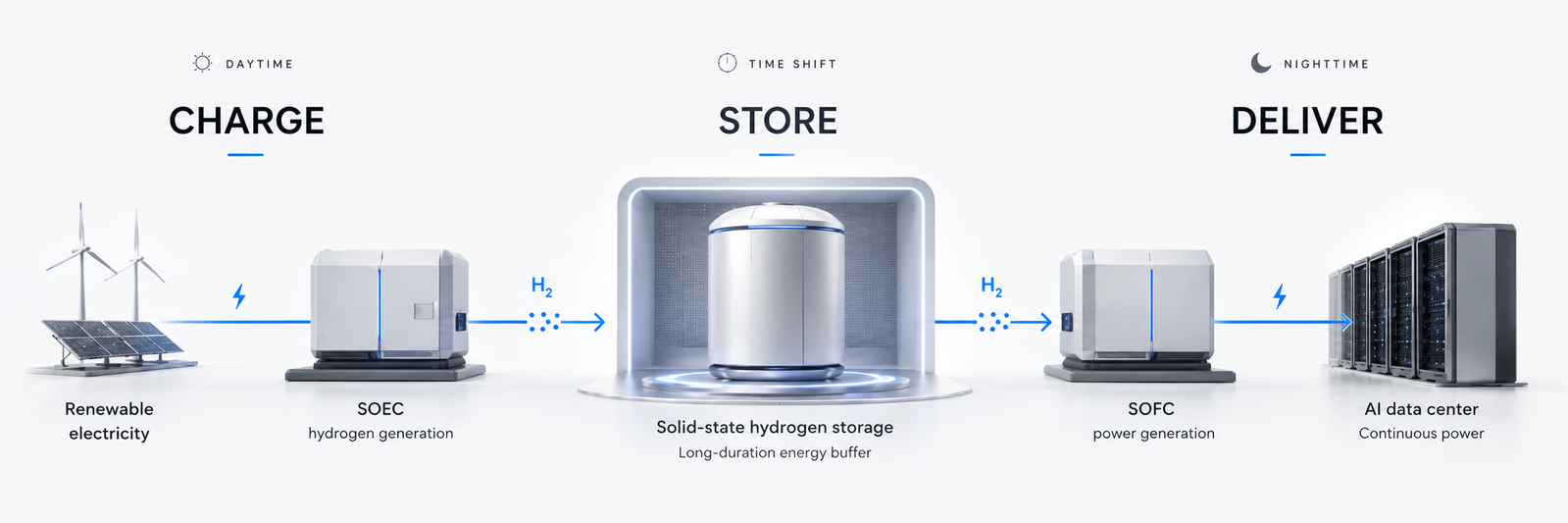
Available energy, stored and dispatched later.
- 01
Available electricity
Use electricity during periods of supply.
- 02
SOEC
Convert available electricity into hydrogen.
- 03
MgH₂ storage
Hold hydrogen in a solid-state energy buffer.
- 04
SOFC
Convert stored hydrogen back into electricity.
- 05
AI data center power
Coordinate delivery to continuous computing loads.
Current R&D, building toward an integrated architecture.
Arclix is focused on printable solid-oxide structures, MgH₂ solid-state hydrogen storage and thermal-integration concepts.
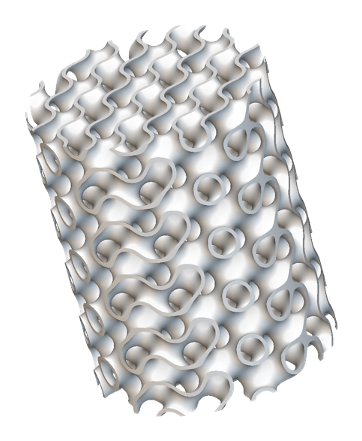
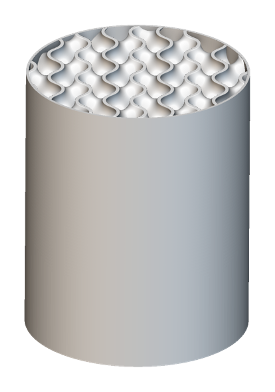
3D-printed SOEC structures
Printable SOEC cell architecture
MgH₂ storage design
MgH₂ paste formulation
Printable storage geometry
Thermal-integration concepts
Long-term integrated architecture
The Energy Pod concept is intended to integrate SOEC, solid-state hydrogen storage, SOFC, thermal management, power electronics and energy-management software. Current research and the future system architecture are distinct stages of development.
Day-to-night and supply-to-demand energy buffering.
The Energy Pod is being developed for AI companies, data center operators and infrastructure developers facing a mismatch between continuous compute demand and available electricity supply.
Supply window
Energy is available
Use available electricity to produce hydrogen.
Energy buffer
Hydrogen stores the value
Hold energy in MgH₂-based solid-state storage.
Demand continues
Power is generated from stored hydrogen
Generate electricity from stored hydrogen for continuous AI compute loads.
A founding team focused on a physical constraint.
Our mission is to remove power availability as a constraint on the sustainable growth of artificial intelligence.
Michael Lee
Co-founder & CEO
Ding Zhang
Co-founder & Business Lead
Tengluan Sui
Co-founder & CTO
Current development stage
Early-stage prototyping, from core materials toward system integration.
- Current focus
- Core materials and component development
- System direction
- Integrated hydrogen energy buffer
- Company stage
- Early-stage, pre-commercial
- Founded
- 2026